
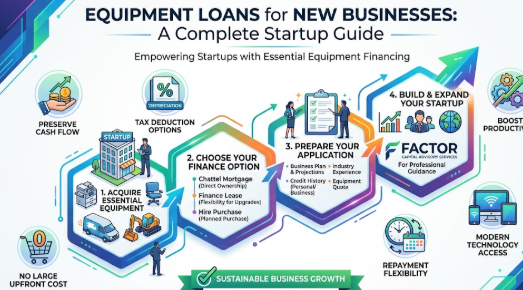
Equipment Loans for New Businesses explained in detail. Learn how startup equipment financing works, approval requirements, interest rates, repayment options, and business growth strategies.
Equipment Loans for New Businesses: Everything Startups Need to Know
Starting a new business requires careful planning, strong financial management, and access to the right equipment. Whether a startup needs commercial vehicles, office systems, construction machinery, medical equipment, or advanced technology, purchasing these assets outright can place major pressure on cash flow. This is why many startups explore Equipment Loans for New Businesses as a practical financing solution that allows them to acquire essential equipment while preserving working capital.
Equipment financing has become one of the most important tools for startups because it helps businesses begin operations without making large upfront purchases. Instead of paying the full cost immediately, businesses spread repayments over a structured term while using the equipment to generate revenue. This allows startups to grow faster, improve productivity, and maintain financial flexibility during the early stages of business development.
Understanding how Equipment Loans for New Businesses work is important because startup financing differs from traditional business lending. New businesses often have limited trading history, lower revenue, and fewer established financial records, which can make lenders more cautious during the approval process. However, many lenders still offer startup equipment financing because the equipment itself often acts as security for the loan.
Equipment loans are commonly used by startups across industries including transport, healthcare, construction, retail, hospitality, agriculture, logistics, and technology. A startup construction company may finance excavators or heavy machinery, while a medical clinic may finance diagnostic equipment and office systems. Restaurants often finance kitchen equipment and delivery vehicles, while technology companies may finance computers, servers, and communication systems. The flexibility of equipment finance makes it valuable for businesses in almost every industry.
One of the biggest advantages of Equipment Loans for New Businesses is the ability to preserve business cash flow. New businesses usually need working capital for marketing, staffing, inventory, operations, and customer acquisition. Spending large amounts of money on equipment purchases can limit growth opportunities and create unnecessary financial pressure. Financing equipment allows startups to keep more cash available for day-to-day operations while still gaining access to the tools required for business success.
Lenders offering startup equipment loans usually evaluate several important factors before approving applications. Business structure, projected income, industry experience, credit history, and the value of the equipment being financed all play a role in determining approval outcomes. Startups with strong business plans and realistic revenue forecasts often improve their chances of securing financing because lenders want confidence that repayments can be managed responsibly.
The type of equipment being financed also affects loan approval and finance conditions. Assets with strong resale value are generally easier to finance because lenders view them as lower-risk security. Commercial vehicles, trucks, agricultural machinery, and construction equipment often qualify for competitive financing because these assets maintain value over time. Technology equipment and specialized machinery may involve different finance conditions depending on depreciation and resale potential.
Interest rates for Equipment Loans for New Businesses vary depending on the lender, the equipment type, repayment term, and the financial strength of the business owner. Startups with stronger personal credit histories and industry experience may secure more competitive rates compared to businesses with limited financial records. Some lenders also require deposits or personal guarantees to reduce lending risk during the early stages of business operation.
Loan structure is another important consideration for startups seeking equipment finance. Businesses can choose from several finance structures including chattel mortgages, finance leases, hire purchase agreements, and commercial loans. A chattel mortgage allows the business to own the equipment immediately while the lender uses the asset as loan security. Finance leases, however, allow businesses to lease equipment for a fixed term while maintaining flexibility for future upgrades. Choosing the right structure depends on ownership goals, tax strategy, and cash flow management.
Repayment terms for startup equipment loans are usually flexible and designed to suit business cash flow. Shorter repayment terms reduce overall interest costs but involve higher monthly repayments, while longer loan terms reduce monthly pressure but increase total borrowing costs over time. Businesses should carefully evaluate affordability before selecting repayment structures to ensure financing supports growth rather than creating financial strain.
Technology has also transformed the way startups manage equipment financing and business operations. Many modern businesses use digital systems, cloud-based software, and mobile platforms to manage accounting, communication, inventory, and financial reporting. Platforms supported through Android help businesses improve productivity, operational efficiency, and mobility in fast-moving commercial environments. Access to technology allows startups to monitor repayments, track business performance, and manage operational workflows more effectively.
One challenge many startups face when applying for equipment loans is limited trading history. Traditional lenders often prefer businesses with established revenue and several years of operational history. However, alternative lenders and commercial finance specialists increasingly offer financing solutions designed specifically for startups and new businesses. These lenders may place greater emphasis on projected business performance, personal credit strength, industry experience, and the value of the financed equipment rather than only focusing on trading history.
Building a strong finance application can significantly improve approval chances for new businesses. Startups should prepare detailed business plans, financial projections, bank statements, and identification documents before applying. Demonstrating industry knowledge and presenting realistic revenue expectations can increase lender confidence and improve access to better financing terms. Businesses should also avoid unnecessary personal or business debt before applying because excessive liabilities may weaken approval potential.
Professional finance advisors can help startups navigate the equipment finance process more effectively. Commercial finance specialists understand lender requirements, approval criteria, and financing structures that suit different industries. They help businesses compare lenders, negotiate repayment terms, improve application quality, and secure competitive finance solutions. Startups seeking commercial finance guidance can explore services available through Factor Capital Advisory Services to better understand equipment funding opportunities and commercial lending strategies.
Another important advantage of equipment financing is the ability to access modern technology and equipment without waiting years to accumulate purchasing capital. Businesses operating with outdated machinery or inefficient systems may struggle to compete effectively in competitive industries. Equipment loans allow startups to begin operations with reliable tools, improve productivity, enhance customer service, and increase operational efficiency from the beginning.
Tax benefits may also play a role in equipment financing decisions. Depending on the finance structure and local tax regulations, businesses may be able to claim depreciation, interest expenses, or lease payments as deductions. These potential benefits can improve long-term financial efficiency and reduce operational costs. Startups should consult professional accountants or financial advisors to understand the tax implications of their financing arrangements before making decisions.
Industries such as logistics, transport, healthcare, construction, agriculture, and retail rely heavily on equipment financing because operational success depends on access to reliable assets. Commercial vehicles, machinery, office systems, and technology platforms are essential for daily operations, customer service, and revenue generation. Financing allows businesses to acquire these assets immediately without compromising overall business stability.
The future of startup financing continues evolving as financial technology, digital applications, and automated lending systems improve access to business funding. Many lenders now offer online applications, faster approvals, and digital document processing, making equipment finance more accessible for startups than ever before. Increased competition among lenders may continue creating better funding opportunities and more flexible finance solutions for new businesses.
In conclusion, Equipment Loans for New Businesses provide startups with an effective way to acquire essential equipment while preserving working capital and supporting long-term growth. Equipment financing allows businesses to begin operations with reliable tools, improve efficiency, and compete more effectively without large upfront financial pressure. By understanding loan structures, repayment terms, approval requirements, and financing strategies, startups can make smarter financial decisions that support operational success and sustainable business growth.
