
Discover the 5 hidden costs of truck finance explained for Australian businesses. Learn how to avoid expensive truck loan mistakes and secure smarter finance deals in 2026.
5 Hidden Costs of Truck Finance Explained
Truck finance has become one of the most important funding solutions for Australian transport and logistics businesses in 2026. Many companies rely on commercial trucks to maintain deliveries, manage freight operations, and expand business capacity without paying large upfront costs. While truck finance can help preserve cash flow and improve business growth, many business owners fail to understand the hidden expenses attached to finance agreements.
The keyword 5 hidden costs of truck finance explained is becoming increasingly important because many borrowers only focus on monthly repayments while ignoring additional long-term expenses. These hidden costs can increase the total borrowing amount significantly and place pressure on business cash flow over time. Understanding these financial risks helps businesses make smarter lending decisions and avoid unnecessary financial stress.
Businesses seeking tailored commercial finance solutions can explore funding options through Factor Capital ServicesAustralian Government Financenesses can also access official financial resources and guidance through urlAustralian Government Financehttps://www.finance.gov.au/.
5 Hidden Costs of Truck Finance Explained
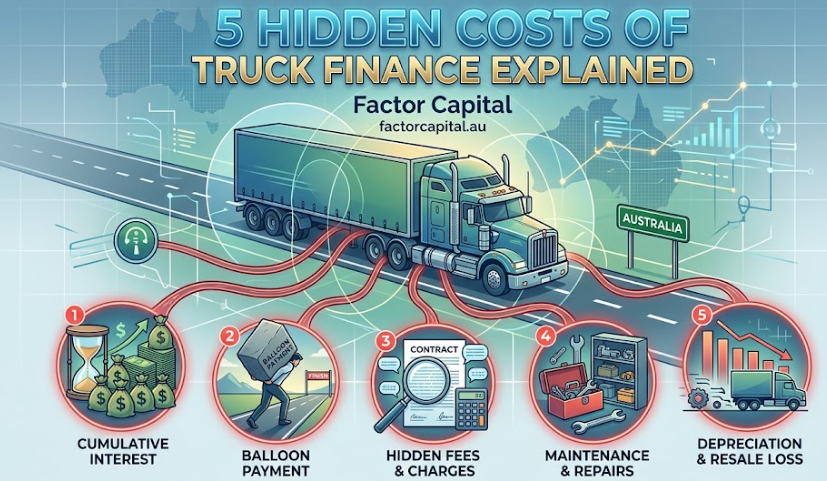
The topic 5 hidden costs of truck finance explained starts with one of the most common financial problems, which is high interest expenses over long repayment periods. Many businesses choose extended truck loan terms because lower monthly repayments appear more manageable. However, longer repayment structures often increase the total interest paid across the life of the loan.
Truck finance agreements with lower monthly repayments may look attractive initially, but businesses can end up paying thousands of dollars more in interest over time. This becomes even more significant in 2026 as interest rates continue fluctuating within the Australian lending market. Businesses should carefully calculate the total repayment amount instead of focusing only on short-term affordability.
Another issue related to 5 hidden costs of truck finance explained is balloon payments at the end of finance contracts. Many truck finance agreements include large final payments designed to reduce monthly repayment amounts during the loan term. While this structure improves short-term cash flow, businesses may struggle to pay the remaining balance later.
Some companies refinance balloon payments repeatedly, creating ongoing debt cycles that increase borrowing costs over time. Understanding final payment obligations before signing a finance contract is essential for long-term financial planning.
The third concern connected with 5 hidden costs of truck finance explained involves hidden lender fees and administrative charges. Many finance agreements contain application fees, account management fees, settlement charges, and early payout penalties that are not always discussed clearly during the approval process.
These additional charges can increase overall finance costs significantly. Businesses should review every condition within finance contracts carefully and request full transparency regarding all fees before accepting any agreement.
Maintenance and repair costs are another major factor associated with 5 hidden costs of truck finance explained. Many businesses focus only on truck purchase prices while ignoring ongoing operational expenses. Commercial trucks require regular servicing, tyre replacements, inspections, and repairs to remain operational and compliant with Australian transport regulations.
Unexpected maintenance costs can affect profitability, especially for small transport companies operating with limited cash reserves. Businesses should include maintenance budgeting within finance planning to avoid future financial pressure.
The final issue highlighted in 5 hidden costs of truck finance explained is depreciation and resale value loss. Trucks lose value over time, particularly when used heavily for freight and commercial transport operations. Some businesses finance vehicles for amounts higher than future resale values, creating negative equity situations later.
If a truck’s market value drops faster than the remaining loan balance, businesses may face financial difficulties when upgrading fleets or refinancing existing loans. Understanding depreciation trends is essential before committing to long-term truck finance agreements.
Why Truck Finance Is Growing in Australia
The topic 5 hidden costs of truck finance explained is becoming increasingly relevant because Australia’s transport and logistics industries continue expanding rapidly. Businesses depend heavily on commercial vehicles to support supply chains, freight services, and regional deliveries across the country.
Truck finance allows businesses to acquire vehicles without paying full purchase prices upfront. This preserves working capital and helps companies invest in staffing, fuel management, and operational growth. However, rising operational expenses in 2026 mean businesses must carefully manage borrowing strategies.
Fuel costs, insurance premiums, labour shortages, and vehicle maintenance expenses continue affecting transport businesses across Australia. Companies that fail to understand the complete financial impact of truck finance agreements may experience long-term cash flow problems.
Understanding 5 hidden costs of truck finance explained allows businesses to approach borrowing more strategically and avoid unnecessary financial risks.
How Hidden Truck Finance Costs Affect Cash Flow
The discussion around 5 hidden costs of truck finance explained also highlights how hidden borrowing expenses can affect business stability. Many businesses underestimate the combined impact of repayments, maintenance, insurance, and fuel expenses on monthly cash flow.
When businesses commit to expensive finance structures without accurate financial forecasting, operational flexibility decreases. Unexpected truck repairs or rising fuel prices can quickly create repayment difficulties.
Cash flow management is especially important for transport companies operating with seasonal revenue patterns or fluctuating freight demand. Businesses should ensure finance repayments remain manageable during slower operational periods.
Another issue linked with 5 hidden costs of truck finance explained is poor budgeting for future vehicle upgrades. Commercial trucks eventually require replacement due to wear, mileage, and compliance requirements. Businesses that fail to prepare for future replacement costs may struggle financially when fleet upgrades become necessary.
Strategic financial planning can help businesses avoid these challenges and maintain long-term operational stability.
How Businesses Can Reduce Truck Finance Risks
One important lesson from 5 hidden costs of truck finance explained is the need for detailed lender comparison before signing finance agreements. Interest rates, repayment flexibility, and contract conditions vary significantly between lenders.
Businesses should compare multiple finance providers instead of accepting the first loan offer available. Accessing professional finance guidance can also improve borrowing decisions and reduce unnecessary expenses.
Understanding loan structures is another important factor related to 5 hidden costs of truck finance explained. Businesses should carefully review whether fixed or variable interest rates are more suitable for their operational needs and risk tolerance.
Fixed-rate finance agreements provide repayment stability, while variable-rate loans may create uncertainty during changing economic conditions. Choosing the right structure can significantly affect long-term finance costs.
Businesses should also maintain strong financial records before applying for truck finance. Updated bank statements, accurate accounting systems, and healthy cash flow management improve lender confidence and may lead to better loan terms.
Another strategy associated with 5 hidden costs of truck finance explained is purchasing reliable vehicles with strong resale value potential. Some truck brands retain market value more effectively than others, reducing depreciation losses over time.
Investing in fuel-efficient and durable trucks can also reduce long-term operational expenses and improve overall profitability.
The Future of Truck Finance in 2026
The future of 5 hidden costs of truck finance explained is closely connected with changing technology and sustainability trends in Australia’s transport sector. Businesses are increasingly investing in modern trucks equipped with advanced fuel efficiency systems and safety technologies.
Many lenders are now supporting environmentally friendly transport investments, including electric and low-emission commercial vehicles. Sustainable fleet financing may become more accessible as environmental regulations continue evolving.
Digital lending platforms are also transforming truck finance approvals. Businesses can now apply for commercial vehicle loans online and receive faster approval decisions through automated financial assessment systems.
However, easier access to finance also increases the importance of understanding hidden borrowing costs. Businesses that borrow without proper financial analysis may still face long-term repayment challenges despite quick approval processes.
Companies that understand 5 hidden costs of truck finance explained are more likely to make strategic borrowing decisions that support long-term growth and financial stability.
Common Warning Signs in Truck Finance Agreements
The keyword 5 hidden costs of truck finance explained also highlights several warning signs businesses should identify before signing finance contracts. Extremely low repayment advertisements may sometimes hide large balloon payments or extended loan terms that increase overall costs.
Some finance agreements also include restrictive conditions related to early repayments, refinancing, or vehicle usage limitations. Businesses should review these conditions carefully to avoid future complications.
Another issue connected with 5 hidden costs of truck finance explained is insufficient insurance coverage planning. Commercial truck insurance can become expensive depending on fleet size, vehicle usage, and freight type. Businesses should include insurance costs within total borrowing calculations before committing to finance agreements.
Poor communication from lenders may also indicate hidden problems within finance contracts. Businesses should work with transparent finance providers that clearly explain repayment obligations, fees, and contract conditions.
Conclusion
The topic 5 hidden costs of truck finance explained is extremely important for Australian transport businesses seeking smarter funding decisions in 2026. Truck finance can support fleet expansion, preserve working capital, and improve operational growth, but hidden borrowing costs can create long-term financial pressure if not managed properly.
Businesses should carefully review interest expenses, balloon payments, lender fees, maintenance costs, and depreciation risks before signing truck finance agreements. These hidden expenses often affect profitability more than businesses initially expect.
Understanding 5 hidden costs of truck finance explained helps businesses approach commercial borrowing strategically and avoid unnecessary financial stress. Careful planning, lender comparison, and professional finance guidance can significantly improve borrowing outcomes.
As Australia’s transport industry continues evolving, businesses that make informed truck finance decisions will remain in stronger positions to maintain growth, improve cash flow, and build sustainable long-term operations throughout 2026 and beyond.
