
Equipment finance rates explained in detail. Learn what affects equipment finance interest rates, how to secure lower repayments, and the best finance options for businesses.
Equipment Finance Rates: How Businesses Can Secure Better Finance Deals
When businesses need vehicles, machinery, technology, or commercial equipment, financing becomes one of the most practical ways to preserve cash flow while continuing to grow operations. One of the biggest factors businesses consider before applying for funding is equipment finance rates because interest rates directly affect monthly repayments, overall loan costs, and long-term financial stability. Whether a business is financing trucks, office systems, medical equipment, or heavy machinery, understanding how equipment finance rates work can help business owners make smarter financial decisions.
Equipment finance allows businesses to acquire important assets without paying the full purchase price upfront. Instead of using large amounts of working capital, businesses spread the cost over manageable repayments while continuing to use the equipment immediately. This financing method is commonly used across industries including transport, construction, healthcare, agriculture, logistics, retail, and technology. However, the total cost of financing often depends heavily on the interest rate offered by the lender.
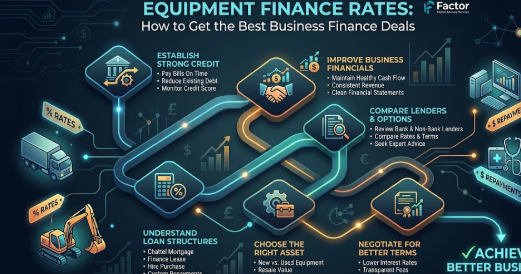
Understanding equipment finance rates is important because rates can vary significantly depending on the lender, the type of equipment being financed, the financial strength of the business, and the structure of the loan agreement. Businesses with stronger credit profiles and stable financial performance generally qualify for lower interest rates, while newer businesses or companies with weaker credit histories may receive higher rates due to increased lending risk.
One of the biggest factors influencing equipment finance rates is the type of asset being financed. Lenders usually prefer assets that retain strong resale value because these assets reduce financial risk. Commercial vehicles, trucks, agricultural machinery, and construction equipment often qualify for competitive rates because they maintain value over time and are easier for lenders to recover if repayments are not completed. Technology equipment may sometimes attract different finance conditions because rapid technological changes can reduce long-term asset value.
The age of the equipment can also affect financing costs. New equipment generally qualifies for lower interest rates because it is considered more reliable and valuable. Used equipment may still qualify for financing, but lenders sometimes apply higher rates depending on the condition, age, and resale potential of the asset. Businesses comparing financing offers should always evaluate both the interest rate and the total repayment amount over the full loan term rather than focusing only on monthly repayment figures.
Business financial health plays a major role in determining equipment finance rates. Lenders review factors such as annual revenue, cash flow stability, trading history, and existing business debts before approving finance applications. Businesses with strong financial performance and consistent income often receive better loan terms because lenders view them as lower-risk borrowers. New startups may still qualify for equipment finance, but rates may vary depending on business structure and available security.
Loan structure is another important factor affecting equipment finance rates. Businesses can choose from several finance options including chattel mortgages, finance leases, hire purchase agreements, and commercial loans. Each structure has different repayment terms, ownership conditions, and tax implications. Chattel mortgages are often popular among businesses wanting ownership of equipment immediately, while finance leases may suit businesses wanting flexibility and easier upgrade options. The chosen finance structure can influence the interest rate and overall repayment cost significantly.
Repayment terms also impact financing costs. Shorter loan terms usually involve higher monthly repayments but lower overall interest costs because the debt is repaid faster. Longer repayment periods may reduce monthly repayment pressure but can increase the total interest paid over time. Businesses should carefully balance affordability with long-term financial efficiency when comparing equipment finance offers.
Economic conditions and central bank interest rates can also affect equipment finance rates across the market. When market interest rates increase, commercial finance rates often rise as lenders adjust borrowing costs. Businesses applying for finance during low-interest-rate environments may secure more competitive repayment structures compared to periods of higher lending costs. Monitoring market trends can help businesses choose the right time to secure financing agreements.
Technology has also transformed the way businesses research and manage equipment financing. Many businesses now use digital systems and mobile platforms to compare lenders, monitor repayments, and manage financial operations more efficiently. Platforms supported through Android help businesses improve communication, operational management, and financial organization in modern commercial environments. Digital access has made it easier for businesses to review financing options and compare rates quickly.
Businesses seeking lower equipment finance rates often improve their chances by maintaining strong credit profiles and organized financial records. Demonstrating stable cash flow, reducing unnecessary debt, and providing accurate financial statements can strengthen finance applications considerably. Some businesses also increase deposit amounts to reduce lender risk, which may help secure more competitive rates and repayment terms.
Comparing multiple lenders is another effective strategy for finding better equipment finance deals. Different lenders use different approval criteria, pricing models, and finance structures. Some specialize in commercial vehicle finance, while others focus on heavy machinery, medical equipment, or technology financing. Reviewing multiple offers allows businesses to identify the most suitable repayment structures and interest rates for their specific needs.
Professional finance advisory services can also help businesses secure competitive equipment finance rates. Experienced commercial finance advisors understand lender requirements, market conditions, and financing structures. They help businesses compare options, negotiate terms, improve approval chances, and understand the long-term financial impact of financing agreements. Businesses looking for commercial finance guidance can explore solutions available through Factor Capital Advisory Services to better understand equipment financing and lending opportunities.
Another important consideration when comparing equipment finance rates is hidden costs and fees. Some finance agreements may include establishment fees, monthly account fees, residual payments, or early repayment charges. Businesses should carefully review the complete finance contract to understand the true cost of borrowing rather than focusing only on advertised interest rates. Transparent finance agreements help businesses avoid unexpected financial pressure later in the loan term.
Businesses should also consider how financing affects long-term growth plans. Equipment financing should support operational efficiency, productivity, and revenue generation rather than creating unnecessary financial strain. Choosing the right finance structure and repayment arrangement can improve cash flow management while allowing businesses to invest confidently in expansion opportunities.
Industries such as transport, logistics, construction, agriculture, and healthcare rely heavily on equipment financing because operational success often depends on access to reliable machinery and vehicles. Competitive equipment finance rates allow businesses in these sectors to maintain productivity without tying up large amounts of working capital. Financing also allows businesses to upgrade equipment more regularly, improve efficiency, and remain competitive within their industries.
The future of commercial finance continues evolving as digital platforms, automated lending systems, and financial technology solutions improve access to business funding. Businesses can now apply for equipment finance online, compare repayment structures digitally, and receive approvals more efficiently than ever before. This increased competition among lenders may continue creating better financing opportunities for businesses seeking affordable equipment funding.
In conclusion, understanding equipment finance rates is essential for businesses planning to finance vehicles, machinery, technology, or commercial assets. Interest rates directly affect monthly repayments, overall borrowing costs, and long-term financial stability. Businesses that compare lenders carefully, maintain strong financial records, and choose suitable finance structures often secure better financing outcomes. Whether using a chattel mortgage, finance lease, or commercial loan, selecting the right equipment finance solution can support business growth, improve productivity, and strengthen long-term financial performance.
